





Preparing Your Home for the Fall Temperature Shift
The October mid-fall heating startup is rapidly approaching, and before the first major cold snap arrives, applying proper home maintenance tips and troubleshooting strategies is essential for a safe seasonal transition. Transitioning a residential climate control system from cooling to heating requires a careful, methodical approach to avoid straining the equipment. When a furnace or heat pump has sat dormant for months, powering it on isn't just a matter of adjusting the thermostat; it initiates a complex mechanical sequence that demands clean components and unrestricted airflow.
Homeowners face a critical decision point during this seasonal shift: recognizing which startup behaviors are completely normal and which indicate an underlying mechanical problem. Understanding the physical mechanics of HVAC systems helps clarify why certain odors or noises occur during the first few cycles of the season. Addressing potential issues early, rather than waiting for freezing temperatures to test the system's limits, ensures seamless comfort as the weather cools down.
The Mechanical Shift: Cooling to Heating
When transitioning from air conditioning to heating, the system shifts its operational focus. For furnaces, this means engaging the ignition sequence, opening gas valves, and heating the heat exchanger before the blower motor distributes the warm air. For heat pumps, the reversing valve physically shifts to alter the flow of refrigerant, pulling ambient heat from the outside air and transferring it indoors. Both processes rely heavily on components that have just endured months of continuous summer operation. Preparing for this shift means verifying that the shared infrastructure—specifically the blower motor, the air handler, and the ductwork—is ready to handle the thermal demands of the October mid-fall heating startup.
How Heavy Cooling Use Impacts Shared Components
The Problem: At Air Rite, a pattern we see often is homeowners assuming that because their air conditioner worked perfectly all summer, their heater will automatically perform flawlessly in the fall. However, heating and cooling cycles rely on shared blower components and ductwork, meaning the wear and tear from summer directly impacts winter readiness.
The Cause: Having maintained Atascadero homes through countless seasons, our team knows firsthand how the region's hot summers put heavy strain on the AC, forcing the blower motor to run for extended hours to maintain indoor comfort. During these prolonged cooling months, dust, pet dander, and microscopic debris bypass even the best filters, accumulating on the blower fan blades, the evaporator coil, and the furnace heat exchanger. The continuous vibration and thermal stress can also cause electrical connections to loosen slightly over time.
The Solution: The mid-fall transition is a critical window for checking these shared components before chilly winter weather arrives. Overlooked summer strain can directly impact the efficiency of the heater when it first kicks on. A restricted blower motor has to work twice as hard to push warm air through the house, increasing energy consumption and putting unnecessary stress on the heat exchanger. Addressing this requires a thorough inspection of the air handler and associated A/C repair services to clear away summer debris, tighten electrical connections, and ensure the blower assembly is balanced and ready for the heating season.
Ductwork Dynamics After Summer
During the summer, cold air is pushed through the ductwork, causing the metal to contract slightly. Condensation can also form if the ducts run through unconditioned spaces like attics or crawlspaces. As the system transitions to pushing hot air, the sudden temperature differential forces the metal to expand. If dust has settled in the duct joints during the transition period, the initial blast of forced air will distribute that stale debris throughout the home. Recognizing this relationship between heavy cooling use and heating preparation is the first step in responsible system management.
Normal Heating Startup Behaviors: What to Expect
During the October mid-fall heating startup, the system will exhibit several behaviors that often alarm homeowners but are entirely safe and expected. Educating yourself on these normal occurrences prevents unnecessary panic and helps you identify when something is genuinely wrong.
The Temporary Burning Dust Smell
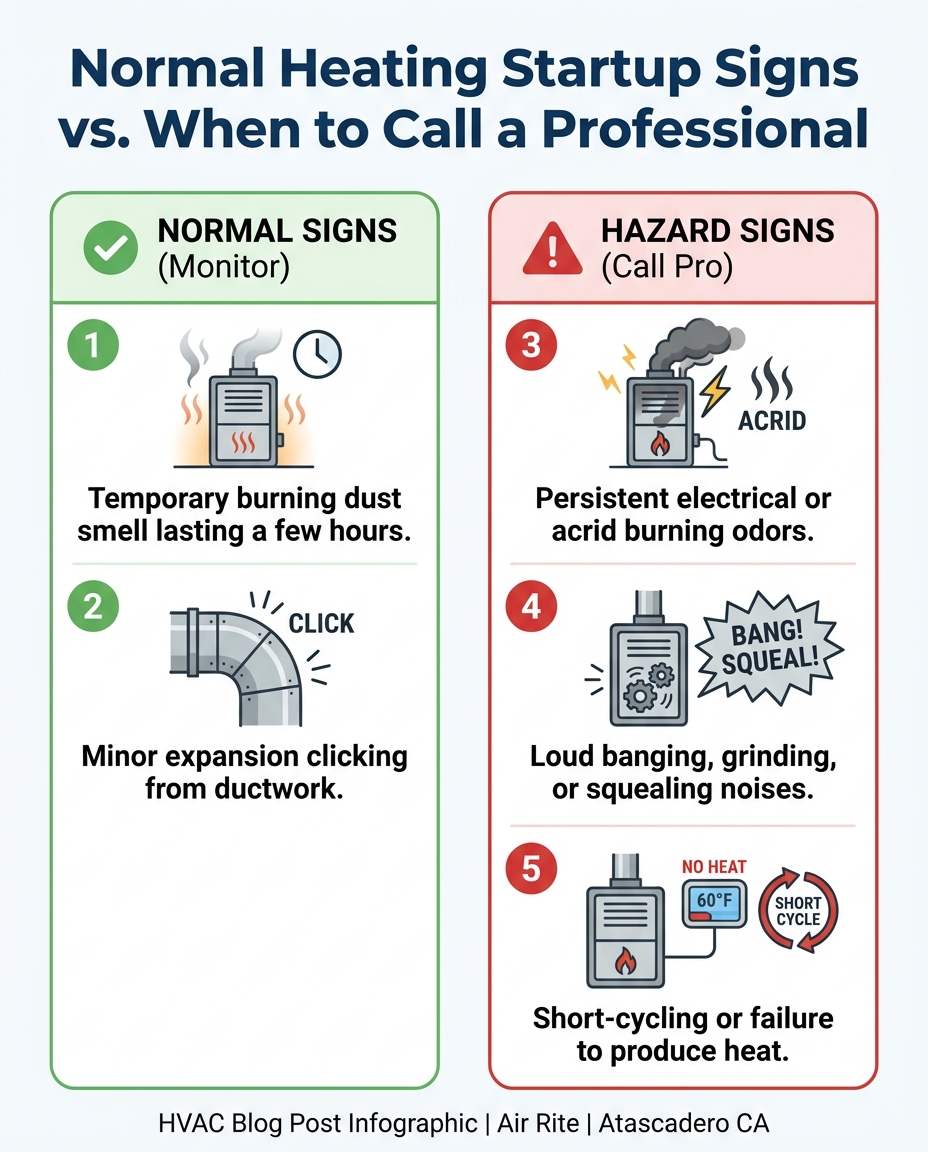
The most common observation during the first heating cycle is a distinct burning odor. This is a temporary burning dust smell caused by the combustion of settled debris. Throughout the spring and summer, airborne particles settle on the cold surface of the heat exchanger. When the furnace burners ignite for the first time in months, the heat exchanger rapidly reaches temperatures exceeding several hundred degrees. The settled dust literally burns off, creating a noticeable smell that circulates through the vents. This normal sign typically dissipates within the first few hours of operation. Opening a few windows during this initial burn-off period can help clear the air quickly.
Thermal Expansion and Ductwork Noises
Initial clicking, popping, or minor expansion noises from the ductwork are standard as temperatures fluctuate. Sheet metal expands when exposed to heat and contracts when it cools. As the furnace pushes a massive volume of hot air into cold ducts, the metal expands against its hangers and joints, creating audible pops. Similarly, the furnace cabinet itself may produce minor clicking sounds as the metal casing warms up. These acoustic changes are a matter of basic physics and do not indicate a mechanical failure.
• Burning dust smell — Typical Cause: Debris burning off the heat exchanger — Expected Duration: 1 to 3 hours
• Popping or banging in walls — Typical Cause: Thermal expansion of metal ductwork — Expected Duration: Intermittent during startup/shutdown
• Clicking before ignition — Typical Cause: Igniter or gas valve engaging — Expected Duration: A few seconds before air flows
• Slight delay in airflow — Typical Cause: System warming up before blower engages — Expected Duration: 30 to 60 seconds
Safe Homeowner Checks Before Turning on the Heat
Before initiating the October mid-fall heating startup, there are several actionable, safe troubleshooting steps that do not require a licensed professional. Performing these checks ensures your system has the best possible foundation for a successful seasonal transition.
Essential Home Maintenance Tips and Troubleshooting Steps
1. Verify and replace all air filters: The single most critical step in heating preparation is ensuring unrestricted airflow. A clogged filter from summer AC usage forces the furnace to work harder, driving up internal temperatures and potentially tripping the high-limit safety switch. Verify that all air filters are clean and properly installed. Pay attention to the MERV rating; extremely high MERV filters can sometimes restrict airflow too much for older blower motors.
2. Test the thermostat settings: Confirm that the thermostat is signaling the heating sequence correctly. Switch the system from "Cool" to "Heat" and raise the temperature a few degrees above the current room temperature. Listen for the click of the relay and wait to hear the furnace ignite. If the thermostat is battery-operated, replace the batteries to ensure a strong, uninterrupted signal throughout the winter.
3. Inspect vents and registers: Walk through every room in the house to ensure supply and return vents are open and unblocked. It is a common misconception that closing vents in unused rooms saves energy. In reality, modern forced-air systems are balanced for the home's total square footage. Closing vents increases static pressure inside the ductwork, which strains the blower motor and disrupts the heat exchange process. Ensure no furniture, rugs, or heavy drapes are obstructing the airflow.
4. Clear the area around the indoor unit: Over the summer, it is easy for boxes, cleaning supplies, or stored items to accumulate around the furnace or air handler in the garage or utility closet. Ensure there is at least a three-foot clearance around the unit to allow for proper oxygen intake for combustion and to reduce fire hazards.
Warning Signals: When to Call a Professional
The Problem: While dust burn-off and minor expansion noises are harmless, certain symptoms during the October mid-fall heating startup point to genuine hazards that require professional intervention. Knowing the boundary between safe homeowner observations and dangerous mechanical failures is vital for home safety.
The Cause: Equipment degrades over time. Electrical wires can fray, blower motor bearings can dry out, and heat exchangers can develop microscopic cracks. During a severe winter cold snap, our Air Rite technicians responded to a local homeowner who experienced a complete heating system failure that endangered a senior patient living in the home. Because the situation involved vulnerable individuals and freezing temperatures, our team prioritized the service call, completing the heating repair quickly to ensure the patient's health and safety. This scenario underscores the importance of identifying warning signals before a total breakdown occurs.
The Solution: If you notice any of the following red flags, shut the system down at the thermostat and schedule an inspection for common HVAC repair issues immediately:
• Electrical burning or acrid odors: Unlike the smell of burning dust, an odor resembling melting plastic, ozone, or burning wires indicates potential wire damage, a failing capacitor, or an overheating blower motor. This is an electrical hazard that requires immediate professional diagnostics.
• Loud banging, grinding, or squealing noises: While minor pops are normal, loud metal-on-metal grinding points to failing motor bearings. A booming sound upon startup could indicate delayed ignition, where gas builds up in the combustion chamber before igniting—a serious safety issue.
• Short-cycling: If the heater turns on, runs for only a minute or two, and shuts off before warming the house, it is short-cycling. This is often caused by an overheating heat exchanger tripping the high-limit safety switch, or a failing flame sensor.
• Failure to produce warm air: If the blower is running but the air coming from the vents remains cold after several minutes, the ignition sequence has failed, or the heat pump's reversing valve is stuck.
The Long-Term Value of Preventative Maintenance
Routine inspections do more than just prepare your system for the October mid-fall heating startup; they improve overall system efficiency and can significantly extend the lifespan of the equipment. Preventative maintenance shifts the focus from reactive emergency repairs to proactive care, ensuring that minor wear and tear is addressed before it cascades into a major mechanical failure.
What Manufacturer-Aligned Maintenance Entails
Not all tune-ups are created equal. As an Elite Dealer for Day & Night Heating and Cooling Products, our team at Air Rite ensures that maintenance is performed to precise, manufacturer-aligned specifications. This level of thorough, authorized care means that every safety check is conducted rigorously. Our technicians verify carbon monoxide venting to prevent dangerous exhaust gases from entering the living space, calibrate the gas pressure for optimal combustion, and test the microfarad readings on electrical capacitors.
Manufacturer-approved maintenance also protects your equipment warranties. Most major HVAC manufacturers require proof of annual professional maintenance to honor parts warranties in the event of a failure. By investing in comprehensive residential HVAC services, homeowners secure peace of mind knowing their system is operating within safe design parameters.
Furthermore, maintaining peak efficiency has financial benefits beyond avoiding breakdowns. A clean, well-calibrated system uses less energy to heat the home. For homeowners considering equipment replacements, federal tax credits and utility incentive programs may apply to qualifying high-efficiency upgrades, such as advanced heat pumps or variable-speed furnaces. Keeping your current system professionally maintained ensures you get the maximum return on your initial investment while planning for future upgrades.
Frequently Asked Questions About Heating Transitions
Why does my heater smell like burning dust when I turn it on?
The temporary burning dust smell occurs because dust and airborne particles settle on the furnace heat exchanger during the summer months. When the heat is turned on for the first time in the fall, those settled particles burn off as the metal rapidly heats up. This is a completely normal process and the odor should clear out within one to three hours of operation.
What should I check before turning on my heater for the winter?
Before starting your heater, always verify that your air filters are clean and properly installed to ensure unrestricted airflow. Check your thermostat to confirm it is set to "Heat" and has fresh batteries. Finally, walk through your home to ensure all supply and return vents are open and unblocked by furniture, rugs, or curtains.
When should I call an HVAC professional for a heater issue?
You should call a professional if you detect persistent electrical burning smells, acrid odors like melting plastic, or if you hear loud grinding, squealing, or booming noises. Additionally, if your system short-cycles (turns off and on rapidly) or fails to blow warm air after several minutes, professional diagnostics are required to ensure safety.
How do I know if my heater needs professional repair?
A heater needs professional repair if it cannot maintain the temperature set on the thermostat, if it produces unusual mechanical noises, or if the system repeatedly trips the circuit breaker. An unexplained spike in your energy bills without a corresponding drop in outdoor temperature can also indicate that internal components are failing and require expert attention.
Is a burning smell from my heater dangerous?
A brief smell of burning dust during the first startup of the season is not dangerous and is expected. However, if the smell resembles burning wires, ozone, or melting plastic, or if the odor persists for more than a day, it is a significant hazard. Electrical odors indicate overheating components and require the system to be shut down immediately for professional inspection.
Ensure a Comfortable Winter with Expert Care
The transition from cooling to heating is a critical time for the health and safety of your home's climate control system. While normal dust burn-off and minor expansion noises are to be expected during the October mid-fall heating startup, staying vigilant for warning signs protects your equipment and your family. Applying these home maintenance tips and troubleshooting steps ensures you are prepared for the season ahead. If you observe any red flags, persistent odors, or mechanical failures, do not wait for a freezing night to seek help. Schedule a professional inspection to address necessary heater repairs and enjoy a warm, comfortable, and safe winter season.
Schedule Expert Service
Customer Testimonials
Our customers consistently praise our exceptional service and professionalism. We are committed to exceeding expectations and delivering outstanding results.

Having used Air Rite for new heating and air conditioning at our home we knew who to go to for our business. This was a big job in an old building and we needed a business that would be efficient, professional and timely. Air Rite is dependable and went out of their way to give us GREAT service. From fixing and repairing existing air conditioning to installing a new one, they are the ones to call. The pricing is very comparable to other companies, and they are professional through and through from Arni to the administrator in the office to the installers. It is a rarity and a relief to find great service. Lastly, the efficientcy in scheduling us so fast and completing the job before expected was a cherry on top. We will always recommend Air Rite.

Events T.
THOMAS HILLS ORGANICS RESTRAUNT
My Construction Company (Palomar Homes) has used Air Rite Heating and Air for the past 12 years on dozens of new home projects. Arne and his crew are always attentive, courteous to me and my clients and do a fantastic job. Air Rite installations are clean and complete. In my 38 years of building, Air Rite has clearly been our best Heating and Air contractor.

Randall J.
PALOMAR HOMES
Here at North County Animal Hospital, we are so grateful for Arnie and his crew! They keep us cool in the summer and cozy in the winter! Anytime we have a need they are quick to address it! We use Air Rite for filter maintenance and any repair issues. They always go above and beyond in service and quality, plus Arnie is an overall nice guy! I would recommend Air Rite without hesitation!

Heathyr G.
NORTH COUNTY ANIMAL HOSPITAL
Air Rite has provided us with new HVAC systems and sheet metal on 9 new homes and one complete rebuild/remodel in Atascadero and Paso Robles since 2016 with the final one being finished as I write this review. They have been fair and professional and have stood by all work. If I have a question they respond at once. I have also recommended them to clients and friends who have later reported how pleased they were with their new system.

Frank H.
HENDERSON & ASSOCIATES
Air Rite has provided us with new HVAC systems and sheet metal on 9 new homes and one complete rebuild/remodel in Atascadero and Paso Robles since 2016 with the final one being finished as I write this review. They have been fair and professional and have stood by all work. If I have a question they respond at once. I have also recommended them to clients and friends who have later reported how pleased they were with their new system.

Mark M.
JUM CONSTRUCTION